Bypass vs Anvil Pruners: Key Differences Explained
.When comparing bypass vs anvil pruners, choosing the right pruning shears can make a huge difference in how cleanly you cut and how healthy your plants remain.
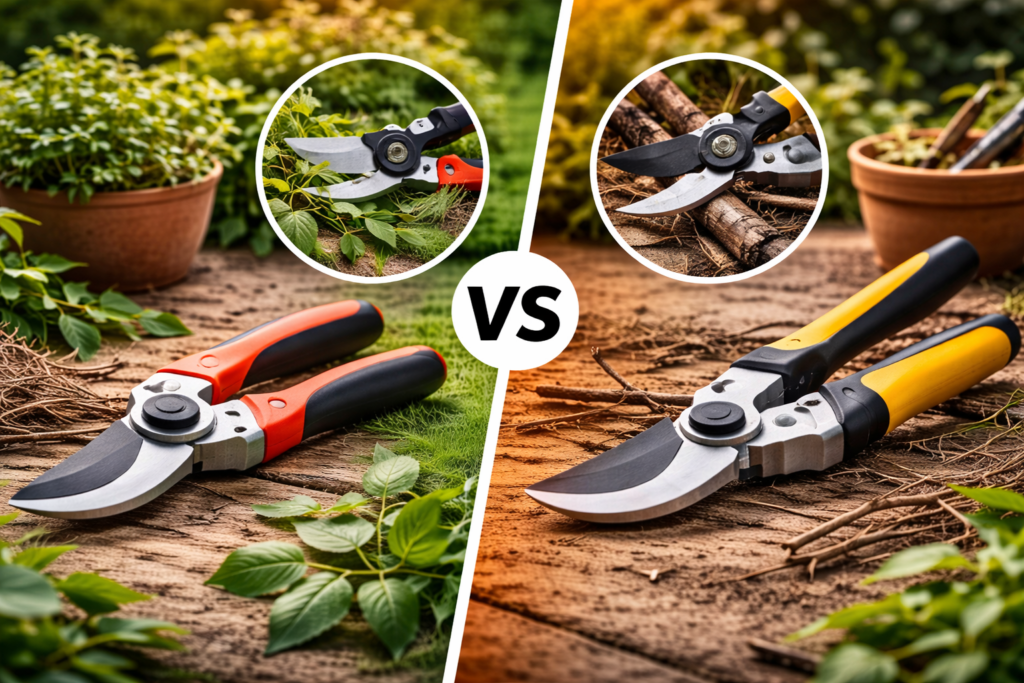
🌿 What Are Bypass Pruners?
Bypass pruners work like scissors.
Two curved blades pass by each other to make a clean, precise cut.
✅ Pros:
- Clean cuts
- Ideal for live plants
- Less plant damage
- More precise trimming
❌ Cons:
- Slightly more expensive
- Can struggle with very hard wood
✔ Best For:
- Roses
- Shrubs
- Green stems
- Flower trimming
- Living branches
🌳 What Are Anvil Pruners?
Anvil pruners use one sharp blade that closes onto a flat surface (the anvil).
✅ Pros:
- Strong cutting force
- Great for dry wood
- Often cheaper
❌ Cons:
- Can crush soft stems
- Less precise
✔ Best For:
- Dead branches
- Hard, dry wood
- Thick stems
🔎 Quick Comparison
| Feature | Bypass Pruner | Anvil Pruner |
| Best For | Live plants | Dry wood |
| Cut Type | Clean & precise | Crushing cut |
| Plant Health | Better for living plants | Can damage green stems |
| Ease of Use | Smooth cutting | More forceful |
🏆 Which One Should You Choose?
👉 Choose Bypass Pruners if:
- You mainly cut living plants
- You care about plant health
- You want precision
👉 Choose Anvil Pruners if:
- You cut dry or dead branches
- You need stronger pressure
- You want a budget option
🌱 Best Recommendation for Most Home Gardeners
For most homeowners, bypass pruners are the better choice.
They are more versatile and safer for healthy plants.
If you regularly remove dead wood, you may want to own both types.
🛒 Top Recommended Models (2026)
🔹 Best Bypass Pruner:
- 👉 Felco F-2 Classic Pruner – Professional-grade Swiss pruner, extremely durable and precise.
- 👉 Fiskars Steel Bypass Pruner – Affordable, ergonomic, great for begginers.
🔹 Best Anvil Pruner:
- 👉 Fiskars Anvil Pruner – Strong cutting power for dry branches.
- 👉 Corona Anvil Pruner – Solid build, good for thicker wood.
🌿 Final Verdict
When comparing bypass vs anvil pruners, the right choice depends on what you cut most often.
Bypass pruners are ideal for live plants and precise trimming, while anvil pruners are better for dry or thick branches.
For most home gardeners, bypass pruners are the safer and more versatile option in 2026.
If you want clean cuts and healthier plants → go with bypass pruners.
If you mainly remove dead wood → anvil pruners are more effective.
For most gardens, bypass pruners are the safer all-around choice.
At the end of the article add:
When choosing between bypass vs anvil pruners, think about the type of plants you maintain.
If you prune roses, vegetables, or green shrubs, bypass pruners provide cleaner cuts and reduce plant stress.
Anvil pruners, on the other hand, are excellent for cutting dry or dead branches where crushing is not a concern.
Many gardeners choose to keep both types in their tool shed.
Using the right pruner for the right task improves plant health and makes pruning easier and safer.
Frequently Asked Questions
Q: Are bypass pruners better than anvil pruners?
A: Bypass pruners are better for live plants, while anvil pruners work well for dry wood.
Q: Can I use anvil pruners on green branches?
A: It’s possible, but they may crush soft stems.
Q: Which pruner is best for beginners?
A: Lightweight bypass pruners are usually easier to control.
Common Mistakes When Choosing Pruners
One common mistake when comparing bypass vs anvil pruners is choosing the wrong type for the job.
Using anvil pruners on live stems can crush plant tissue and slow down healing.
On the other hand, using bypass pruners on thick, dry branches may damage the blade over time.
Another mistake is ignoring comfort and ergonomics.
If you prune frequently, look for pruners with cushioned grips and a smooth locking mechanism.
The right tool should feel comfortable in your hand and allow precise control.
Understanding these small differences can make a big impact on your garden’s health and your overall pruning experience.
Related Guides:
Best Gardening Gloves
Best Garden Shears