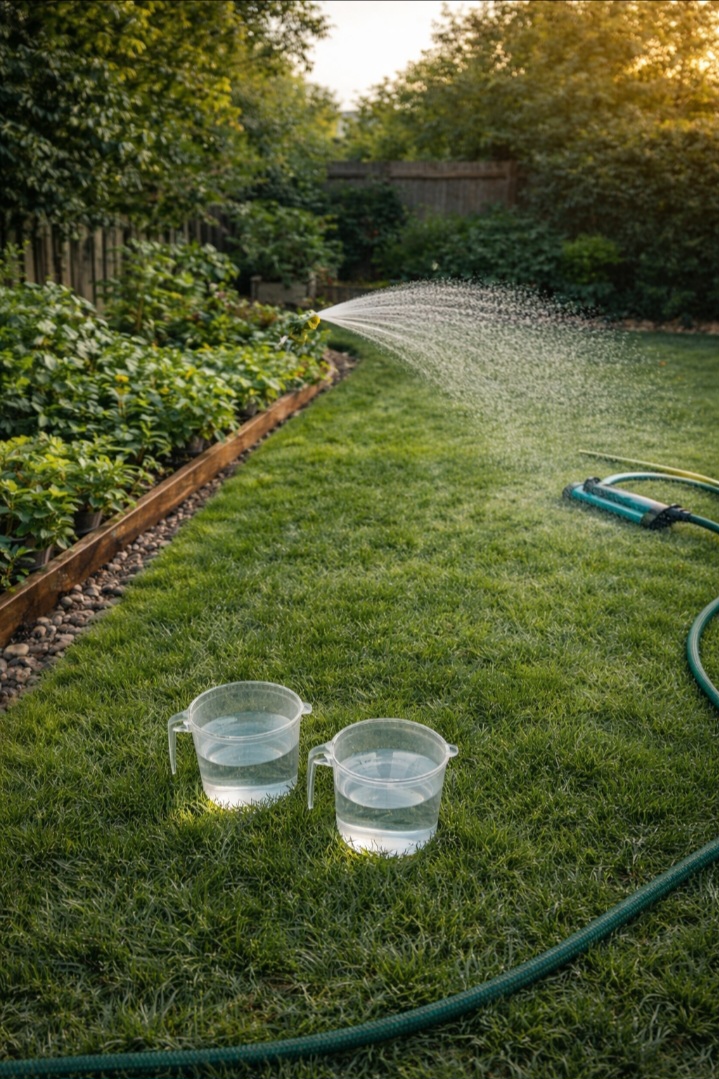
A small lawn is easier to maintain — but it can also dry out faster than a large yard.
If you’re wondering how often to water a small lawn, the short answer is:
Most small lawns need deep watering 2–3 times per week, providing 1 to 1.5 inches of water per week total.
But that’s not the full story.
Your ideal watering schedule depends on:
- Grass type
- Soil type
- Climate
- Season
- Sun exposure
Let’s break it down properly.
The Golden Rule: Water Deeply, Not Daily
Many homeowners make the mistake of watering a little every day.
That creates:
- Weak, shallow roots
- Higher disease risk
- Grass that burns quickly in heat
Instead:
✔ Water deeply
✔ Water less frequently
✔ Encourage roots to grow 4–6 inches deep
Deep roots = stronger, greener lawn.
How Much Water Does a Small Lawn Need?
Most lawns require:
- 1 to 1.5 inches of water per week
- Split into 2–3 sessions
Simple Measurement Trick (Coffee Cup Method)
Place 3–4 empty cups or tuna cans around your lawn.
Run your sprinkler.
When the cups collect 1 inch of water total — you’re done for the week.
This prevents overwatering, which is very common in small yards.
Watering Frequency by Season
🌸 Spring
Water 1–2 times per week, depending on rainfall.
☀️ Summer
Water 2–3 times per week.
During extreme heat (90°F+), check soil moisture more often.
🍂 Fall
Reduce to 1–2 times per week.
❄️ Winter
Most lawns do not require watering unless you live in a warm southern climate.
Adjust Based on Grass Type
Cool-Season Grass (Kentucky Bluegrass, Fescue, Ryegrass)
- Needs more water in summer
- Prefers consistent moisture
Warm-Season Grass (Bermuda, Zoysia, St. Augustine)
- More drought tolerant
- Can handle deeper but less frequent watering
If you’re unsure which type you have, check your region’s common grass varieties.
Soil Type Matters More Than You Think
Sandy Soil
- Drains quickly
- Requires slightly more frequent watering
Clay Soil
- Retains water longer
- Needs slower, deeper watering sessions
Small lawns with sandy soil dry out much faster — especially in full sun.
Proper watering is only part of lawn care. Choosing the right equipment also makes a big difference — especially if you have a small yard.
best lawn mowers for small & medium yards
Best Time of Day to Water a Small Lawn
Water between 5 AM and 9 AM.
Why?
- Less evaporation
- Lower disease risk
- Better root absorption
Avoid watering at night. Wet grass overnight increases fungus risk.
Signs You’re Overwatering
- Yellow grass
- Mushy soil
- Fungus patches
- Mosquito presence
- Excess weeds
Overwatering is more common than underwatering.
Signs Your Lawn Needs More Water
- Grass turns dull bluish-green
- Footprints stay visible
- Blades curl inward
- Soil is dry 2 inches below surface
If you notice these signs, increase depth — not frequency.
Should You Use a Sprinkler for a Small Lawn?
Yes — but choose wisely.
For small yards, oscillating or compact sprinklers provide even coverage without flooding specific areas.
If you’re unsure which type works best, see our detailed guide on choosing the right sprinkler for small lawns.
(Internal link here to your buyer article.)
Avoid automatic daily watering systems unless properly programmed.
Using the right hose or sprinkler system helps distribute water evenly across your lawn.
best expandable garden hose for small yards
Quick Reference Watering Chart
| Condition | Frequency |
| Mild spring weather | 1–2x per week |
| Hot summer | 2–3x per week |
| Clay soil | Fewer, deeper sessions |
| Sandy soil | Slightly more frequent |
| Shaded lawn | Less frequent |
| Full sun lawn | Slightly more frequent |
Common Small Lawn Watering Mistakes
- Watering every day
- Watering at night
- Not measuring water output
- Ignoring soil type
- Shallow watering
Fixing these alone can dramatically improve lawn health.
If you’re working with limited outdoor space, combining lawn care with raised garden beds can help maximize your yard’s potential.
best raised garden beds for small spaces
Final Answer: How Often Should You Water a Small Lawn?
Water deeply 2–3 times per week, aiming for 1–1.5 inches total per week, and adjust based on:
- Grass type
- Soil condition
- Climate
- Sun exposure
Consistency is more important than frequency.
When watered correctly, even a small lawn can stay thick, green, and drought-resistant all season long.